Frequently Asked Questions
Do you offer a labor guarantee?
Yes, we provide a 90-day labor guarantee on all RV repairs and services. This ensures your peace of mind and demonstrates our commitment to quality workmanship.Can you fix slide room issues?
Yes, we repair and realign RV slide-out rooms. We correct alignment, seal, and motor issues to ensure smooth operation and proper insulation.Do you service all RV types?
Yes, we work with any make or model including Class A, B, and C motorhomes, pull trailers, fifth wheels, travel trailers, and tent trailers.How quickly can you respond?
We offer extremely fast response times and emergency services. Most repairs can be completed same day, with parts ordered quickly when needed.What's your experience level?
We have over 10 years of experience in RV repair and maintenance. Our team is extremely knowledgeable and capable in diagnosing and repairing all RV systems.Do you use OEM parts?
Yes, we use OEM parts and safety-tested seals for water heater repairs and other services to ensure reliable, long-lasting performance.Can you service Dometic appliances?
Yes, we're experienced with Dometic, Norcold, Coleman, and Atwood systems. We provide complete RV appliance service including refrigerators, microwaves, and stoves.Do you serve Thousand Oaks?
Yes, we serve Thousand Oaks, Moorpark, Camarillo, Newbury Park, Agoura Hills, and Ventura. Many clients visit from these communities for dependable service.What's included in RV inspections?
Our comprehensive inspections cover electrical, plumbing, roof, and chassis systems. We provide detailed reports outlining needed maintenance and upgrades for safety.Do you repair trailer brakes?
Yes, we provide full inspection and repair for electric and hydraulic trailer brakes, including magnet checks, wiring, and drum replacement for safe travel.How often should you reseal an RV roof?
Most RV roofs need resealing every 1–3 years depending on sun exposure and climate conditions. UV rays and heat accelerate membrane wear, especially in Southern California's intense sun. At Camper Keepers, we inspect roof seams and recommend resealing based on visible cracking or weathering to prevent leaks before they start.What causes an RV water heater to stop working?
Common causes include faulty thermostats, corroded anode rods, pilot light issues in gas units, or tripped circuit breakers in electric models. Sediment buildup can also reduce efficiency and damage heating elements. Regular anode rod replacement and annual maintenance help extend water heater lifespan and prevent emergency failures.Can you repair both 12-volt and 120-volt RV electrical systems?
Yes, RV electrical systems use both low-voltage 12-volt DC for lights and accessories, and standard 120-volt AC for appliances when plugged into shore power. At Camper Keepers, we diagnose and repair both systems, including circuit troubleshooting, fuse box testing, rewiring, and ground fault protection installation to keep your RV safe and functional.What's the difference between RV roof patching and full membrane replacement?
Patching repairs localized damage like punctures or small tears using industry-approved sealants, while full membrane replacement involves removing the entire roof layer and installing a new one. Replacement is necessary when widespread cracking, UV degradation, or multiple leaks compromise the roof's integrity beyond what spot repairs can fix.How do you know if your RV slide-out motor needs repair?
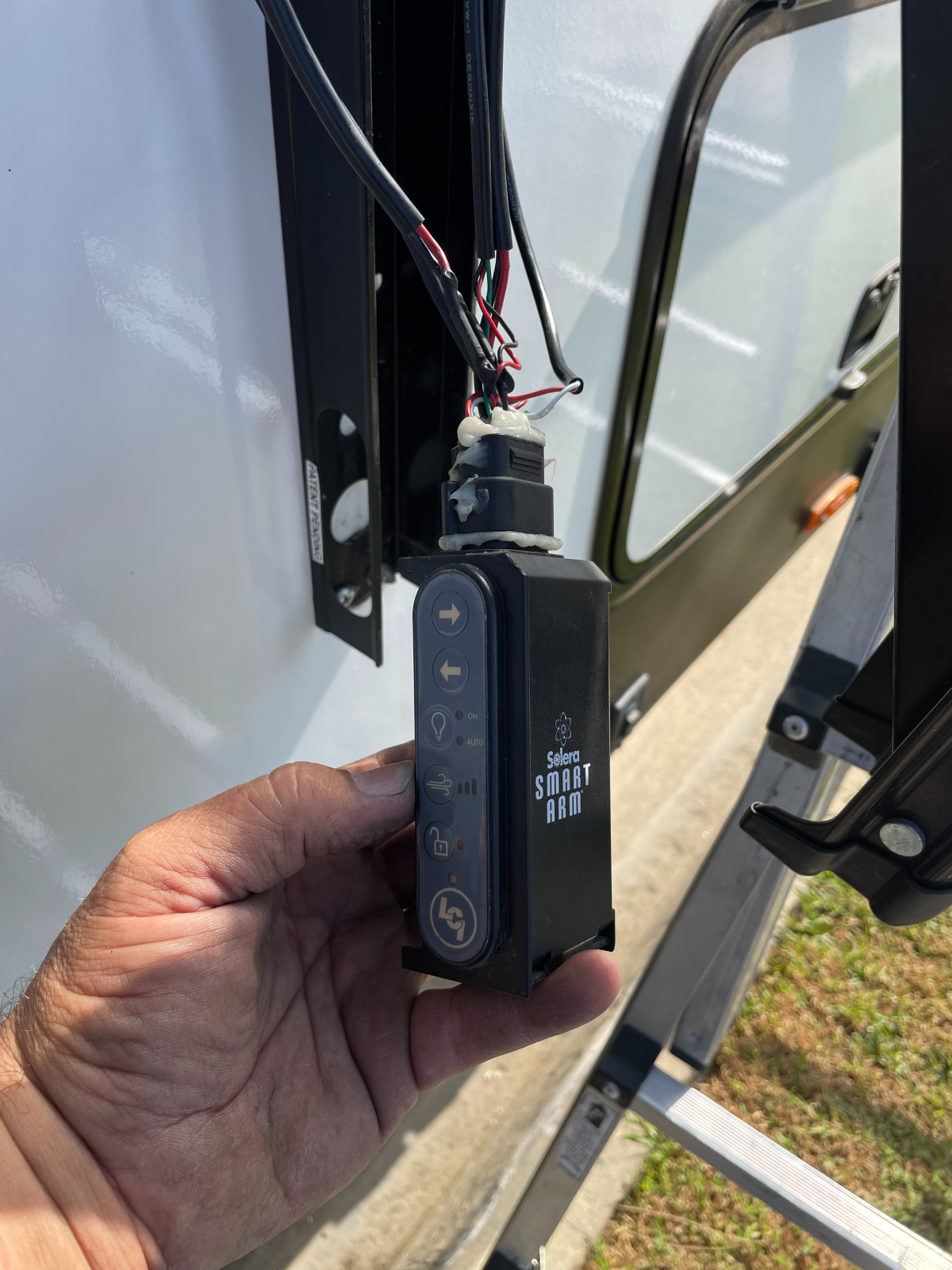
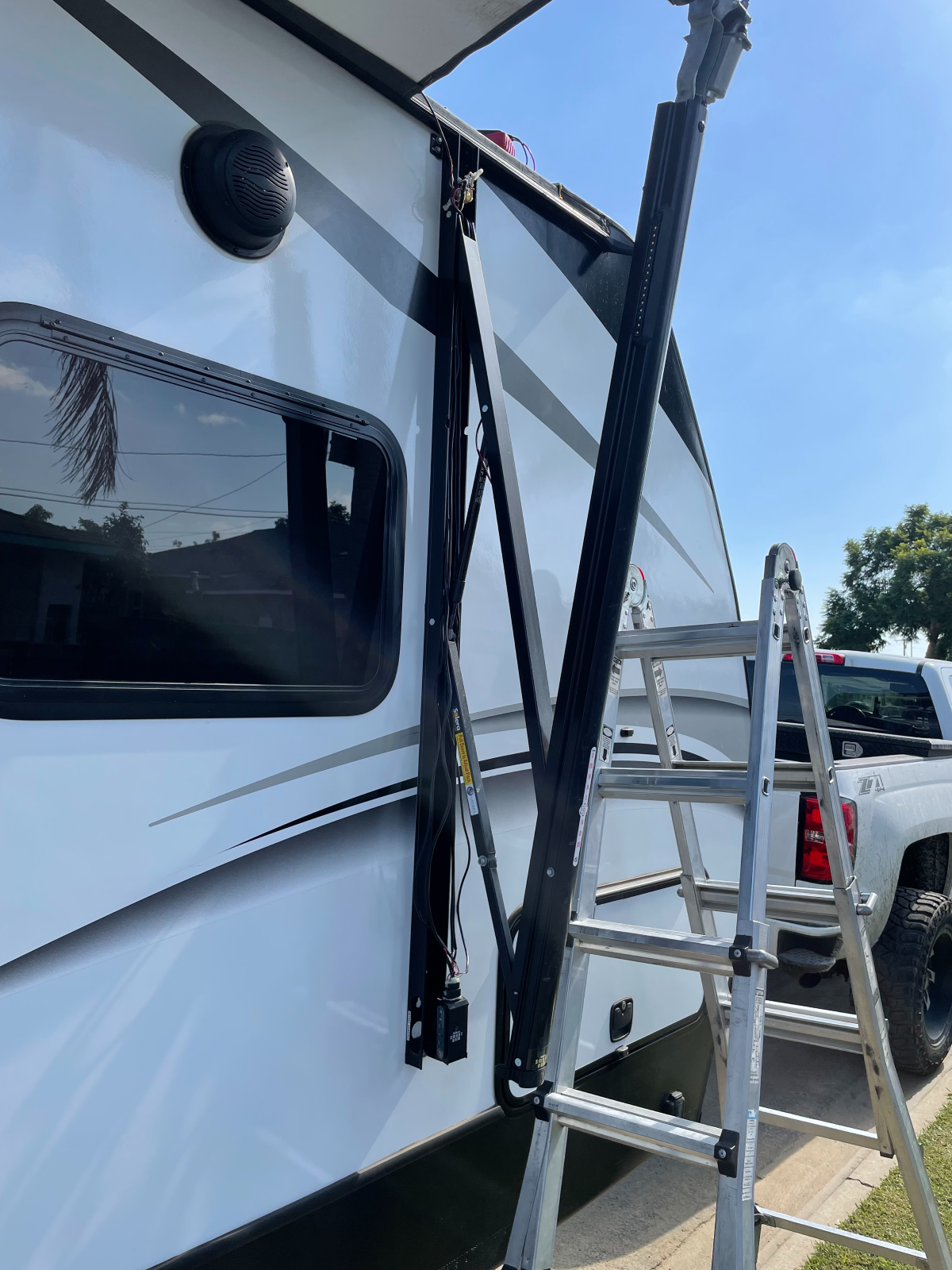
Warning signs include grinding noises, slow or uneven movement, the slide stopping mid-cycle, or complete failure to extend or retract. These symptoms often indicate motor wear, gear damage, or misaligned tracks. At Camper Keepers, we test slide-out systems and perform motor repairs, seal replacements, and track alignment to restore smooth operation.Why does my RV refrigerator stop cooling?
RV refrigerators can fail due to faulty thermostats, burner or heating element issues, low propane pressure, or coolant leaks in absorption systems. Blocked ventilation and improper leveling also reduce cooling efficiency. Camper Keepers repairs refrigerators from major brands like Dometic and Norcold, diagnosing both gas and electric cooling problems.How does UV protection coating help RV roofs in California?
UV protection coatings reflect sunlight and reduce heat absorption, slowing down membrane degradation caused by intense sun exposure common in Southern California. These coatings extend roof lifespan by preventing cracking, fading, and brittleness. Applying UV coatings during routine maintenance is a cost-effective way to protect your investment and avoid premature membrane replacement.What's involved in RV anode rod replacement?
The anode rod is a sacrificial metal component that attracts corrosive elements, protecting the water heater tank from rust. Replacement involves draining the tank, removing the old rod, and installing a new one—typically needed every 1–2 years. At Camper Keepers, we use OEM parts and recommend regular replacement to prevent tank corrosion and extend water heater life.Can solar panels be integrated into existing RV 12-volt systems?
Yes, solar panel integration involves connecting panels to your RV's battery bank through a charge controller, allowing you to harness renewable energy for boondocking and off-grid camping. At Camper Keepers, we handle solar panel installation, inverter troubleshooting, and battery testing to ensure seamless integration with your existing 12-volt system for reliable power.What causes RV slide-out seals to fail?
Slide-out seals deteriorate from UV exposure, extreme temperature changes, dirt buildup, and repeated extension cycles. Cracked or torn seals allow water, dust, and pests to enter the RV. Regular cleaning and lubrication extend seal life, but replacement is necessary when visible damage occurs. Camper Keepers replaces seals to maintain weatherproof protection and prevent interior damage.What's the biggest mistake RV owners make with electrical systems?
Ignoring intermittent electrical issues like flickering lights or tripped breakers is a common mistake that can lead to serious problems like shorts, fires, or complete system failure. Small issues often indicate loose connections, corroded wires, or faulty components. At Camper Keepers, we recommend immediate diagnostics to prevent safety hazards and costly repairs down the road.How often should I service my RV air conditioner?
RV air conditioners should be inspected and serviced at least once a year, ideally before warm weather begins. Annual maintenance includes cleaning the coils, checking refrigerant levels, inspecting electrical connections, and replacing filters to ensure optimal cooling efficiency.What causes low water pressure in an RV?
Low water pressure typically results from a failing water pump, clogged inline filters, kinked supply lines, or partially closed valves. In older RVs, mineral buildup inside fittings can also restrict flow. Identifying whether the issue is pump-related or a blockage helps determine the right repair approach.How do I know my RV converter or inverter is failing?
Signs of a failing converter or inverter include batteries not charging while on shore power, flickering 12-volt lights, or appliances losing power when unplugged from a hookup. These components regulate power between your battery bank and AC systems, so prompt diagnosis prevents cascading damage to other electrical components.Can you repair RV awnings that won't retract?
Yes, awning issues commonly stem from broken torsion springs, damaged roller tubes, worn fabric, or faulty motorized control systems on power awnings. Leaving a damaged awning deployed risks wind damage and injury. Repair or replacement depends on whether the hardware or the fabric itself is the primary failure point.What's the best way to prevent RV plumbing leaks?
Inspect all water line fittings, connections, and tank seals at least once a year. Winterizing your fresh and gray water systems protects pipes from freeze cracking, even in mild Southern California winters. Catching small drips early prevents water damage to cabinetry, flooring, and substructure that can become expensive to repair.Why is my RV furnace blowing cold air?
A furnace blowing cold air is usually caused by a sail switch failure, dirty burner, low propane pressure, or a faulty igniter. The sail switch must detect adequate airflow before allowing ignition, so a stuck or worn switch is a frequent culprit. Cleaning the combustion chamber and testing the ignition sequence resolves most cases.How do I prepare my RV for long-term storage?
Proper storage prep includes draining and flushing the water system, disconnecting or trickle-charging the battery, inspecting the roof for cracks, and covering vents to keep pests out. Running the generator briefly each month and lubricating slide-out seals also preserves mechanical components during extended periods of non-use.Is it safe to drive with a cracked RV windshield?
A cracked windshield compromises structural integrity and can obstruct your field of vision, making it unsafe to drive. Even small chips can spread rapidly from road vibration or temperature changes. Motorhome windshields are large and specialized, so timely inspection determines whether repair resin or full replacement is the appropriate fix.Why does my RV generator keep shutting off?
Generators commonly shut down due to low oil levels triggering the safety cutoff, clogged fuel filters, dirty carburetors, or overloading from running too many appliances simultaneously. Running the generator under load for about two hours monthly keeps internal components lubricated and helps prevent fuel system gumming during periods of infrequent use.What is your RV valet service, and how does it work?
Our valet service makes getting repairs completely hassle-free. Instead of driving your rig to us, we pick up your RV or camper directly from your home, storage facility, or campsite, transport it to our shop for service, and deliver it back to you once repairs are complete.
How can I prevent costly RV repairs during long-term travel?
Routine preventive maintenance—such as checking roof sealants every few months, inspecting tire pressure and suspension components, servicing air conditioner coils, and regularly exercising your generator under load—is the best way to catch minor wear before it turns into an expensive, major repair.